A beard hair transplant moves your own scalp follicles into patchy areas of the beard, where they grow permanently. Here is how the procedure works, who it suits, how long the growth really takes, and what a natural masculine result looks like.
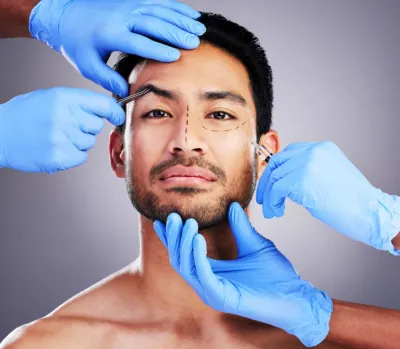
A beard hair transplant takes permanent follicles from the back of your scalp and places them, one or two hairs at a time, into the bare or thin parts of your beard. Those hairs grow for life, take a razor, and thicken over the first year. The procedure suits men whose facial hair has never filled in, as well as men left with gaps by acne scarring, burns or old surgery.
Facial hair carries more weight for many men in Surat than they admit at first. A patchy jawline changes how you photograph, how you style yourself and sometimes how confidently you present in a room. Fortunately this is one of the more reliable procedures in male cosmetic surgery, provided the design is right.
Beard hair transplant: a procedure that moves individual hair follicles from the back of the scalp into the beard area, where they continue growing permanently as facial hair.
Genetics and follicle sensitivity to androgens decide most of it. Some men simply carry fewer beard follicles in the cheeks, and no supplement changes that. Scarring, alopecia areata, thyroid disease, previous burns and old surgical incisions account for the rest. Ethnicity also plays a part, since beard density varies naturally across populations.
Age matters too. Beard density often keeps increasing into the late twenties, which is why I usually ask men under twenty four to wait unless the cause is scarring. Meanwhile it is worth ruling out treatable causes. Patchy round bald spots that appeared suddenly may be alopecia areata, which is a medical condition rather than a surgical one.
For context on normal hair behaviour, the NHS notes that losing roughly 50 to 100 hairs a day is entirely normal, and it advises getting a diagnosis before approaching commercial clinics. That guidance sits on the NHS page about hair loss and its causes, and it applies just as much to facial hair.
Follicles are extracted one by one from the lower back of the scalp under local anaesthesia, sorted under magnification, then placed into tiny slits made in the beard area at the correct angle. The whole session runs four to eight hours depending on graft numbers. You stay awake, you can talk and eat, and you go home the same day.
Before a single follicle moves, we draw the beard line together with you sitting upright and relaxed. Cheek lines, the moustache border and the jaw edge are marked, then checked in a mirror and adjusted. Because a beard frames the face, a line drawn a centimetre too high or too flat reads as artificial for years afterwards.
Scalp hair grows out at a fairly open angle. Beard hair, by contrast, lies almost flat against the skin and points downwards on the cheeks, forwards under the chin and outwards along the jaw. Each recipient slit therefore has to be made in the direction that region naturally grows. Get that wrong and the beard bristles rather than lies, which no amount of trimming fixes.
Natural beards are built mostly from single hair follicles, especially along the borders. We separate grafts accordingly, keeping single hairs for the outline and reserving the occasional two hair graft for the dense central regions. That is slow work, and it is exactly what separates a natural result from an obvious one.
Numbers depend entirely on the area being covered. A patchy goatee or moustache refinement may need only a few hundred grafts. Full cheek and jawline construction in a man with sparse growth can run to several thousand, sometimes split across two sessions a year apart. Density is planned to suit your donor supply rather than a target number.
Counting happens at the consultation under magnification, mapping the bare zones against your donor density. We would rather quote a range and stay at the lower end than promise a figure your scalp cannot supply. Splitting a large case across two sittings also protects the donor area, since it heals fully in between.
Donor capacity is the real limit. Your scalp has a finite reserve, and taking too much thins the back of the head permanently. So we plan conservatively, particularly in younger men who may want scalp work later.
| Option | How it works | Permanence | Best suited to |
|---|---|---|---|
| Beard hair transplant | Moves your own follicles into bare areas | Permanent, grows and needs shaving | Genuine gaps, scarred areas, absent growth |
| Topical minoxidil | Stimulates existing dormant follicles | Only while used, reverses on stopping | Thin but present growth, never truly bare skin |
| Scalp and beard micropigmentation | Pigment dots mimicking stubble | Fades over two to four years | Men wanting a shaved look with no surgery |
| Styling and trimming | Shapes growth to disguise gaps | Immediate, needs constant upkeep | Mild patchiness in one small area |
Minoxidil deserves a fair mention because it genuinely helps some men with thin growth. However, it cannot create follicles where none exist, and stopping it reverses any gain. Micropigmentation looks convincing at conversation distance but never gives texture. Surgery is the only option that puts real, growing hair into bare skin.
Good candidates have healthy donor hair at the back of the scalp, realistic goals and stable general health. Men over twenty four give the most predictable results, since beard growth has usually finished maturing by then. Scarred areas transplant well, although scarred skin has a poorer blood supply, so we plant at a lower density and often stage the work.
Situations where we advise caution or delay include:
Tiny scabs form around each graft and flake away within seven to ten days. Mild facial swelling settles in about three days. Most men return to work within a week, though the beard area stays visibly pink for a fortnight. Shaving resumes at around ten days, and trimming a little later.
Then comes the part nobody warns men about. The transplanted hairs shed between weeks two and four, and the beard looks exactly as patchy as before. That shedding is expected, because the follicle survives while the visible shaft falls out. New growth starts at three to four months, becomes convincing by six months, and reaches its finished density at nine to twelve months.
Sleep slightly propped up for the first three nights, which limits facial swelling. Keep the treated area dry for forty eight hours, then wash gently with the solution we provide rather than ordinary soap. Avoid the gym, swimming pools and direct Surat sun for a fortnight, and skip steam rooms entirely during the first month.
Transplanted beard hair does not fall out later, because it keeps the genetic character of the donor area at the back of the scalp. Nor does it grow at a different rate once mature, although texture can differ slightly, being marginally softer than native beard hair. Oils, herbal packs and derma rollers do not create new follicles, whatever the reels claim.
One further question comes up constantly. Transplanted beard hairs need no lifelong medication to survive, unlike some scalp treatments, because donor follicles from the back of the head are not sensitive to the hormones that drive pattern loss.
Cost depends on the number of grafts, the size and difficulty of the area, whether scarring is involved, and whether the work is staged over two sessions. Anaesthesia and theatre time also feature. We quote a single figure after counting the area and assessing your donor supply, covering surgery, medication and follow up. Broader technique detail sits on our hair transplant treatment page.
Realistically, a beard transplant delivers a fuller, well shaped beard that suits your face. It will not turn sparse growth into a dense mane, and a second session is sometimes needed for the density men picture. Saying that upfront saves a lot of disappointment later.
Beard work is judgement heavy rather than machine heavy. Dr. Ashutosh Shah plans every case as a plastic surgeon first, which means facial proportion, scar behaviour and hairline aesthetics all feed into the design. Sessions are performed personally rather than delegated to technicians, and follow up continues through the full twelve month growth cycle.
Men from across Surat, Navsari and Bharuch come to us for exactly that reason. If a patchy jawline has been on your mind for years, bring it to a consultation and get a straight answer about what your donor area can actually deliver. You can book a private consultation whenever it suits you.
Yes. Follicles taken from the back of the scalp keep their original genetic character, so they continue growing in their new position for life. They need regular shaving and trimming just like native facial hair, and they respond normally to razors and beard styling.
One session covers most cases. Men wanting very high density, or those with extensive scarring or a large bare area, sometimes benefit from a second session about a year later, once the first growth cycle has finished and true density can be judged accurately.
Transplanted hairs shed between weeks two and four, which is normal. Fresh growth appears at three to four months, looks convincing by six months, and reaches full density at nine to twelve months. Patience through the shedding phase matters more than anything else.
Local anaesthesia numbs both the donor scalp and the beard area completely, so the session itself is comfortable. Afterwards expect tightness and mild soreness for two to three days, easily managed with simple painkillers. Most men describe the experience as long rather than difficult.
Gentle shaving usually resumes at around ten days, once tiny scabs have flaked away naturally. Trimming with a machine follows shortly after. Picking at scabs before they separate on their own risks dislodging grafts, so let the skin release them by itself.
Temporary swelling, redness, small scabs, numbness and occasional ingrown hairs are the usual short term effects. Infection is rare with proper aftercare. Poor angling by an inexperienced operator causes unnatural growth direction, which is the most difficult problem to correct later.
Cost reflects graft numbers, the size and difficulty of the recipient area, whether scar tissue is involved, and whether the work is staged across two sessions. A single inclusive quote covering surgery, medication and every follow up visit is given after assessment.
Usually yes. Scarred skin has a weaker blood supply, so grafts are placed at a lower density and the work is often staged. Results in these areas are genuinely life changing for many men, though coverage builds gradually across two planned sittings.
Book a discreet consultation at Elegance Clinic in Surat, or start online from home.